
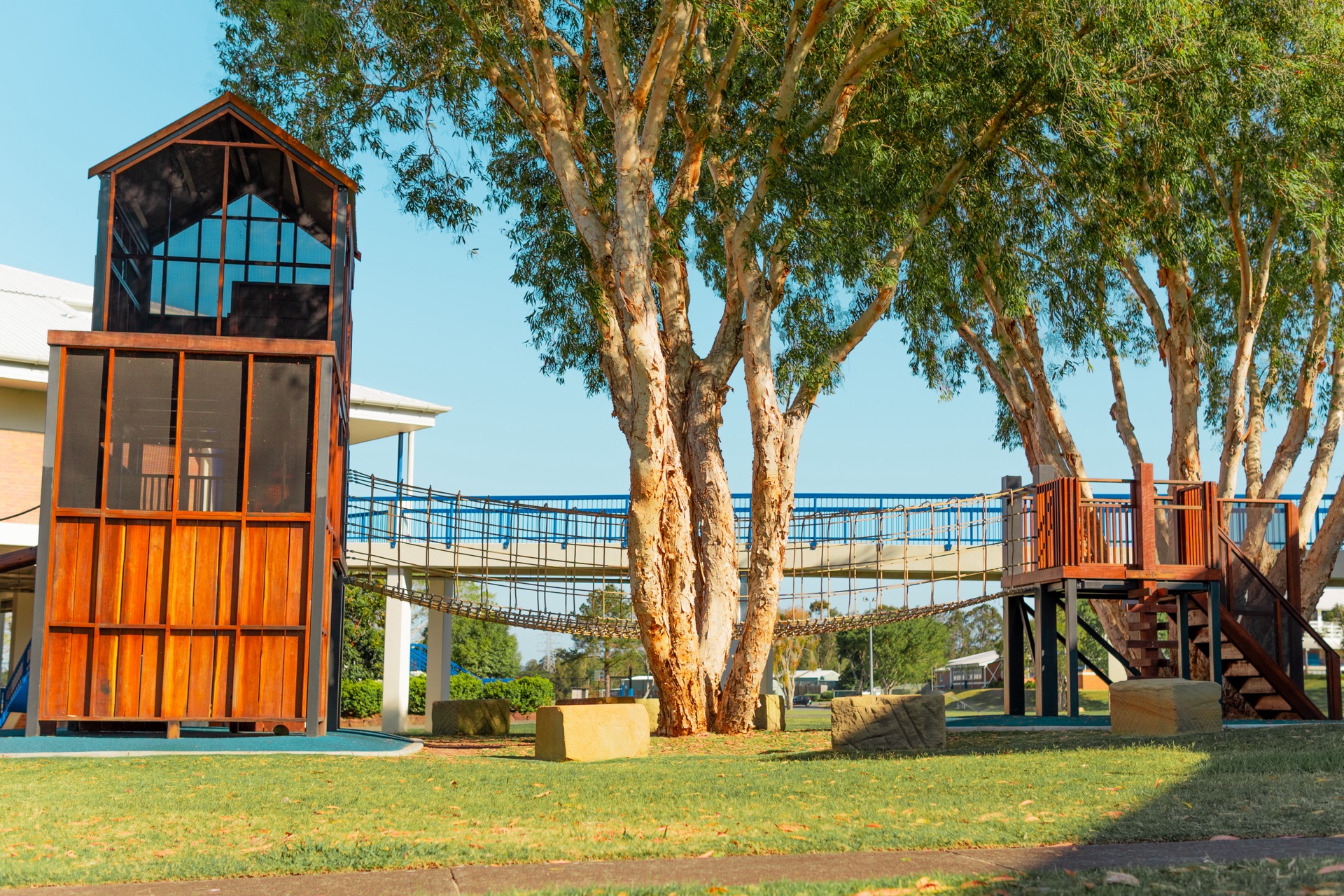
Direct Answer
Softfall (impact attenuating surfacing) exists for a singular, critical reason: to reduce the risk of serious head injury from falls. It does not eliminate all injuries; it cannot prevent a twisted ankle or a broken arm from an awkward fall. Its purpose is precise and lifesaving.
Any playground equipment above 600mm in height requires compliant impact attenuation surfacing in the fall zone.
Types of Softfall Surfacing
Impact-absorbing surfacing comes in several forms:
Unitary (Rubber) Surfaces
Soft-Pour Rubber
Two-layer system with cushioning base and colourful wear layer. Poured on-site, creating a seamless surface. Most durable option.
Rubber Matting
Pre-formed rubber tiles or mats installed over prepared base. Can be replaced in sections if damaged.
Synthetic Grass + Shockpad
Synthetic turf installed over rubber shockpad layer. Natural appearance with impact protection.
Loose-Fill Surfaces
Impact-Graded Mulch
Specifically processed mulch that meets impact standards. Not generic landscaping mulch, which doesn't provide adequate protection.
Sand
Can meet impact standards when properly maintained at required depth. Common in early childhood settings.
Critical Depth Requirements
For loose-fill materials, depth is everything:
Installation Depth
Minimum: 300mm as per Australian Standards
Our recommendation: 400mm
Loose-fill settles, shifts, and transfers. Installing at 400mm ensures the surfacing maintains required performance over time.
Common failure: Sites installed at 300mm initially compact down to 100-200mm, no longer meeting impact criteria. Regular replenishment and raking are essential.
What Softfall Is NOT
Understanding softfall's limitations is as important as understanding its purpose:
- A cure-all: It won't remove the learning inherent in risk, nor should it sanitize play to the point children stop sensing danger
- Protection from all injuries: It protects heads from serious injury, not every possible injury (sprains, scrapes, bruises)
- Generic landscaping mulch: Standard garden mulch doesn't meet impact standards
- Soft vegetation: While some regions may accept soft vegetation if it passes softfall tests, this is not appropriate for early childhood settings due to inconsistency in performance as plants break down
When Is Softfall Required?
Under Australian Standards (AS 4422):
- Any equipment with a fall height over 600mm requires impact attenuation
- Surfacing must extend to the edge of the fall zone
- Fall zones are typically 1500mm minimum from elevated equipment, or further for equipment with forced movement (swings, slides)
- Surfacing must be tested to verify it meets Critical Fall Height (CFH) requirements
Testing and Verification
Softfall only works if it's verified:
- At installation: Impact attenuation testing (with kinetic reader) ensures the surfacing meets head injury criteria
- Ongoing: Surfaces can deteriorate—particularly loose-fill materials compacting or shifting
- After adjustments: Re-testing may be needed when major adjustments or replenishments occur
Maintenance Matters
Compliance must be paired with practical maintenance—softfall only works if it's deep enough and maintained:
- Loose-fill: Regular raking to redistribute material, especially under swings and at slide exits where it migrates
- Rubber: Inspect for damage, separation, or degradation; clean debris that could affect performance
- Depth checks: Regularly verify loose-fill maintains minimum depth
- Documentation: Record inspections and any replenishment or repairs
Key Takeaways
- Softfall's purpose is specific: reducing serious head injuries from falls
- Required under equipment over 600mm height
- Options include rubber, mulch, sand, and synthetic grass with shockpad
- Loose-fill must be 300mm minimum (we recommend 400mm)
- Generic landscaping mulch does NOT meet standards
- Testing and ongoing maintenance are essential for compliance
- Over-softening every corner can dull children's risk perception
Questions About Surfacing?
Choosing the right surfacing involves balancing cost, maintenance, aesthetics, and performance. Book a free discovery call to discuss your playground and surfacing needs.
Send an Enquiry