
Direct Answer
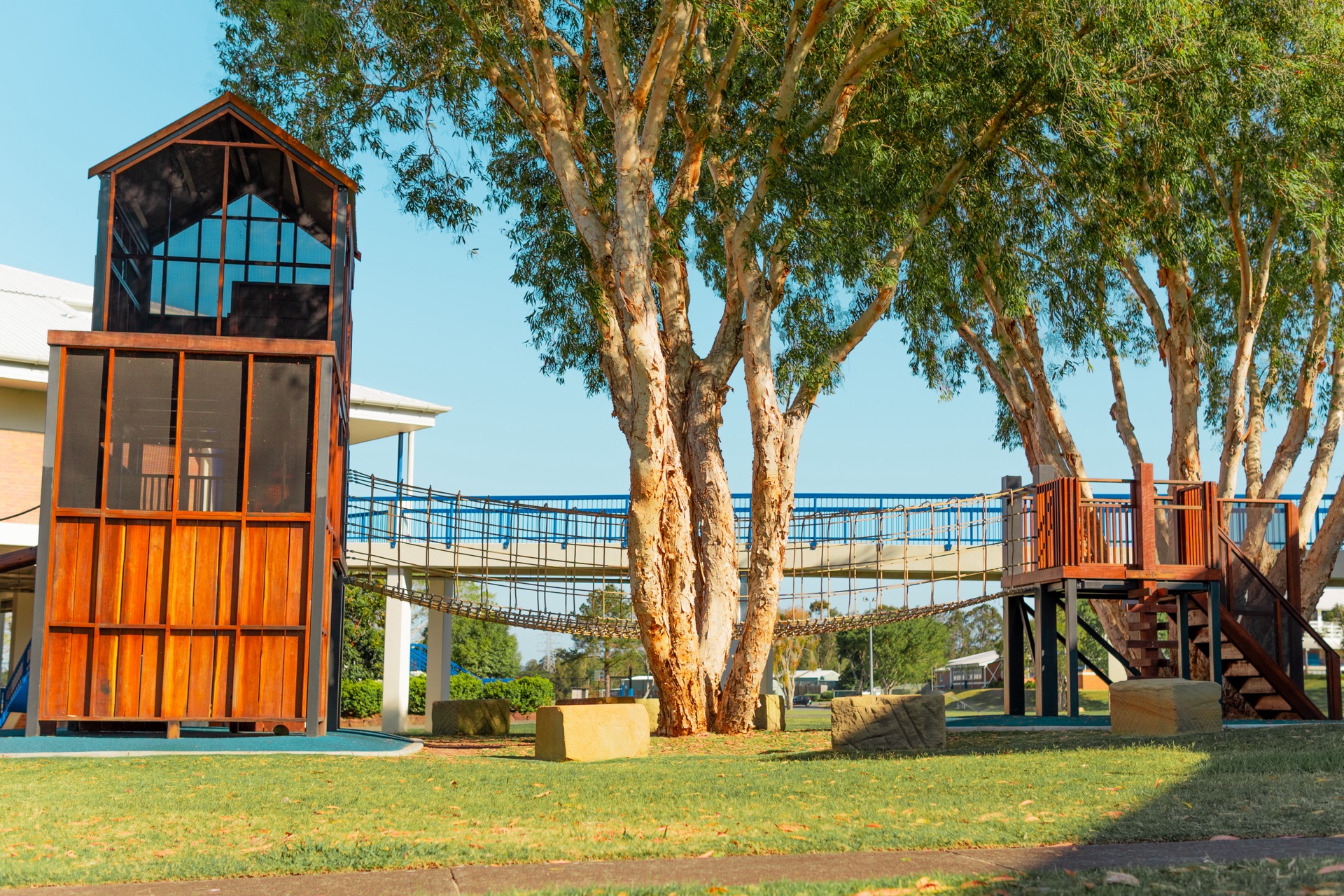
Environment creates behaviour. Because behaviour is children's language, the playground must invite rich, varied expressions—fast and slow, social and solitary, gross and fine motor, creative and contemplative. Overloading one play type excludes many children and narrows development. Thoughtful design shapes not just what children do, but who they become.
Beyond the Four S's
Traditional playground design often reduces play to the "four S's": swing, slide, seesaw, sandpit. This legacy frequently creates a sequence of activities—climb here, walk here, slide here—that ignores diverse interests and needs.
The result is playgrounds that work for some children but exclude others. A child who doesn't enjoy climbing or swinging finds little to engage with. A child who needs quiet or fine motor play is out of luck.
What Is Play Bias?
Understanding Play Bias
Play bias occurs when a playground overloads one type of play while neglecting others. Most commonly, this means too much gross motor (climbing, sliding) and not enough social play, sensory exploration, creative expression, or quiet retreat.
Play bias excludes children who don't thrive in the dominant play type. It also narrows development for all children by limiting their range of experiences.
Environment Creates Behaviour
This is the key insight: behaviour is children's language, and the environment shapes what children can say.
A playground with only climbing equipment creates climbing behaviour. A playground with diverse zones—fast-moving play, quiet retreat, creative expression, social spaces—creates diverse behaviour and supports diverse children.
Design must invite:
- Fast and slow: Running and resting
- Social and solitary: Group play and quiet retreat
- Gross and fine motor: Whole-body movement and detailed manipulation
- Creative and contemplative: Making and reflecting
- Risky and regulated: Challenge and calm
The Environment as Third Teacher
Inspired by the Reggio Emilia approach, we recognise the environment as a "third teacher"—alongside adults and peers. A well-designed space can adapt faster to children's developmental leaps than adults can through instruction alone.
Co-Regulation with Place
Design smaller nooks, semi-secluded zones, and independent-feeling spaces that still allow supervision. These support children's autonomy and emotional regulation.
Scale and Agency
Child-sized, child-honouring environments should show evidence of children's imprint and voice—not just maintenance-driven uniformity.
Relationship-Centred
Environments should support connections among children, educators, and families—representing community and culture.
Starting with Who Children Are
Effective design follows this sequence:
- Being: Start with who children are—their developmental needs, interests, identities
- Doing: Then consider what they do—the activities and experiences they need
- Having: Only then think about what they have—the equipment and features
Most playground design starts at the end—with equipment—and works backwards. This produces playgrounds that look complete but don't truly serve children.
Observing Play for Insight
Children's play behaviour reveals their developmental needs. Observation can surface:
- Strengths: What they gravitate towards and master
- Gaps: What they avoid or struggle with
- Needs: Underlying developmental requirements
What Avoidance May Signal
- Avoidance of small-world play may signal challenges with social complexity
- Avoidance of water/messy play may point to sensory processing needs
- Persistent retreat/seclusion may indicate social cohesion challenges or sensory overload
A well-designed playground creates the diversity needed to both observe these patterns and provide the experiences children need.
The Deeper Purpose
Playground design isn't about filling space with equipment. It's about creating an environment that speaks to children—that invites them to explore, challenge themselves, connect with others, and discover who they are. The playground is a laboratory for life.
Key Takeaways
- Environment creates behaviour: Design shapes what children can do and express
- Avoid the four S's trap: Swing-slide-seesaw-sandpit isn't enough
- Play bias excludes: Overloading one play type leaves children out
- Balance is key: Fast/slow, social/solitary, gross/fine motor, creative/contemplative
- Third teacher: The environment teaches alongside adults and peers
- Being before doing: Start with who children are, not what equipment to buy
- Observation reveals needs: Watch play patterns to understand development
Ready to Design for Learning?
We design playgrounds that function as learning environments—diverse, balanced, and responsive to children's developmental needs. Book a free discovery call to discuss your vision.