
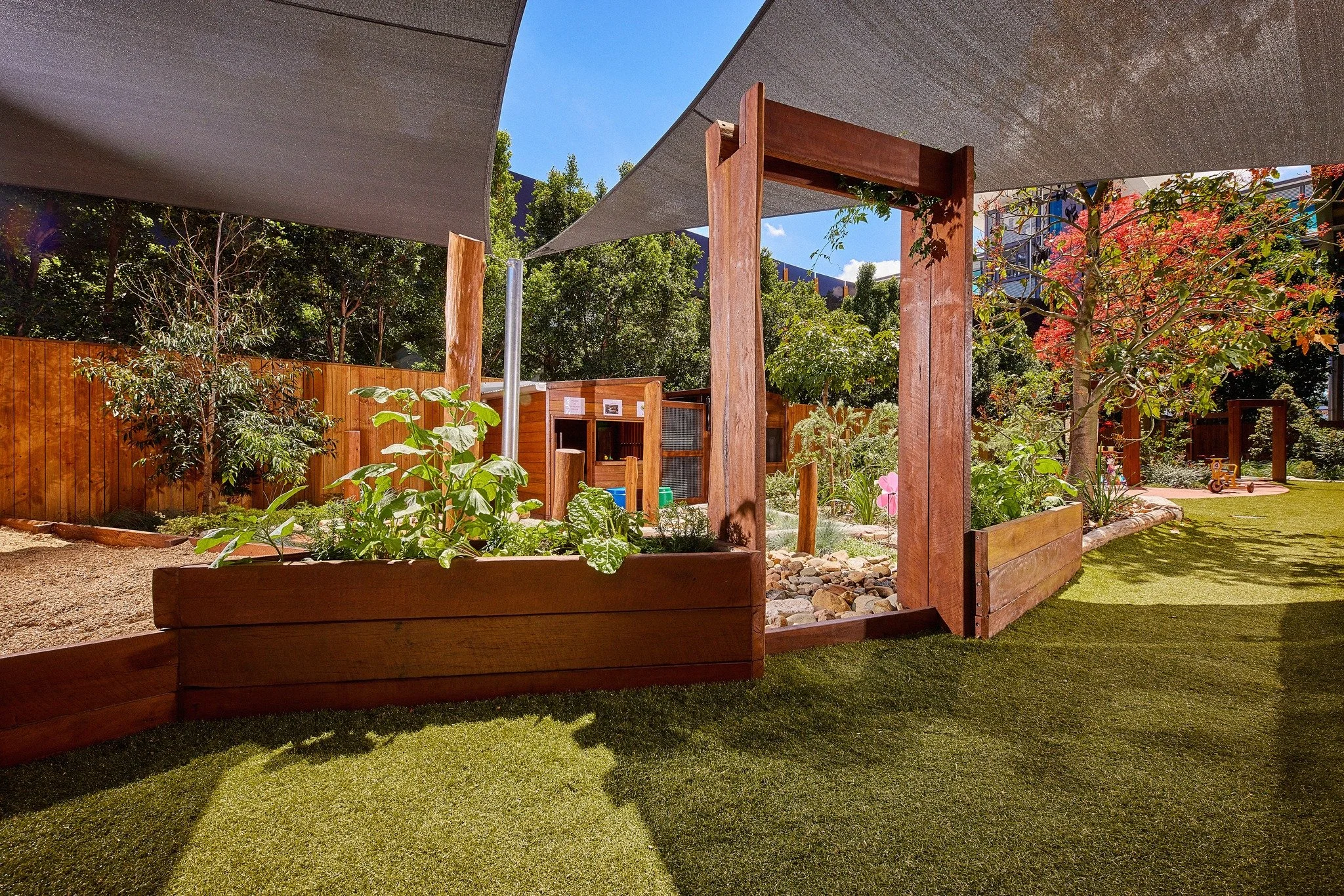
Our fear of failure, fear of success, fear of uncertainty, fear of liability, fear of judgement and fear of the unknown — with all the fear prevalent in society today, I don't feel it necessary to start fearing one of the very things that empowers us to be fearless: risk.
I'm not referring to fearlessness in the way of jumping out of a plane or off a bridge. I am referring to the fearless of heart. The fearlessness that empowers us to be confident and self-aware, to follow our dreams, to have original thought, and come from a place of unconditional love that we are not afraid for the whole world to witness.
This is the fearlessness that is our responsibility as educators, teachers, parents and grandparents — to nurture and grow in the children we love. This is why I not only support children when exploring risky play, but I also support educators and parents in understanding how to engage with risky play.
Prefer to read the full e-book?
Download the beautifully designed PDF — imagery, layout, and all — to read offline or share with your team.
Fear Is a Positive Emotion
As we all know, fear is a very real feeling. Even though it may not seem like it at the time, fear is a positive emotion. Positive in the sense that it keeps us safe and gives us an awareness that reaches every part of our bodies — parts we tend to forget about in day-to-day living.
For example, when we feel fear, we not only feel the emotion but it also changes the physical state of our body, and we go into the primal fight-or-flight mode. When we enter this mode, our body does incredible things in order to preserve our wellbeing. Fear forces us to pay attention; the body will switch off digestion, immunity and growth, to name a few.
We take this into account when observing children who have not celebrated an appropriate level of fear, and who are faced with a new environment or new relationships (seemingly low level of fear). Children in these situations could find themselves in a state of fight or flight that in turn creates anxiety and leads to their body shutting off their essential operating systems.
This for me draws a very obvious link between a child's emotional state and the many childhood illnesses that are so rampant today. We can be proactive as opposed to reactive in this situation by simply empowering children to create their own measure of appropriate fear through the exploration of risk.
Children Can Assess Their Own Risk
Risky play creates a setting where children can become aware of their physical capabilities, making a child more likely to achieve goals they have set. In turn, they are receiving a positive emotional reward in the form of feeling good, which evolves into building confidence.
For those who feel that young children are not capable of analysing their own risk, I invite you to observe a child on a swing when pushed too high. The child will have an instant emotional reaction when they feel like they have exceeded their own level of comfortable risk: "Stop! Too high." or "Arrrggghhh!"
Where Did the Fear Come From?
So, where did this fear of children being exposed to risk come from? The Department? Our fear of liability? Regulations? Uncertainty? Judgement? We could examine the Department and the regulations to see the disconnect and inconsistencies surrounding this topic — however, we would still need to delve deeper.
Over time, we have seen trends towards surplus safety, or no risk whatsoever, where educators were relinquished of their initiative to make informed safety decisions for children during play. The intention behind this trend may have been to have consistency and zero risk of litigation — hence, no-risk environments were created. The Department and regulators took on board this approach, and it became a standard across the industry.
Today, I am so happy to see more centres of all shapes and sizes embracing and acknowledging the importance of risky play, with the Department and regulations following suit. More and more educators are pushing forward by educating themselves and others on the benefits of risky play and the sustainable development of children — it's amazing to be part of this revolution.
Risk vs. Hazard
If you would like to join the revolution, I invite you to do two things: understand the difference between risk and hazard, and always prioritise children's development.
Risk
Something that is possible to negotiate and may be appropriate for particular situations and children.
Hazard
Something that is inherently dangerous and needs to be remedied — such as a climbing structure with sharp edges or loose boards that could seriously injure children if they play on it.
Source: Curtis, D. (2010, March–April).
A Risk-Benefit Assessment
A simple way to embed the practice is to start assessing risk with a benefit, as opposed to just looking at eliminating all risk. A risk-benefit assessment will allow you to have a tangible measure of appropriate levels of risk, because you can then see what the risk, hazard and benefit is in a particular element of your outdoor play environment.
An example of a risk-benefit assessment is available and downloadable on the Wearthy Resources page.
Putting Children's Development First
Putting children's development first is the number one way to have the most positive impact on a child's life. When we put their development first, we are respecting the child by acknowledging our own limiting beliefs. We are building our own confidence in understanding by being the best educators we can be.
Doing this allows us to be part of something much bigger than just ourselves, our centre or our industry. We are contributing to the development of the world — to the fearless of heart.