
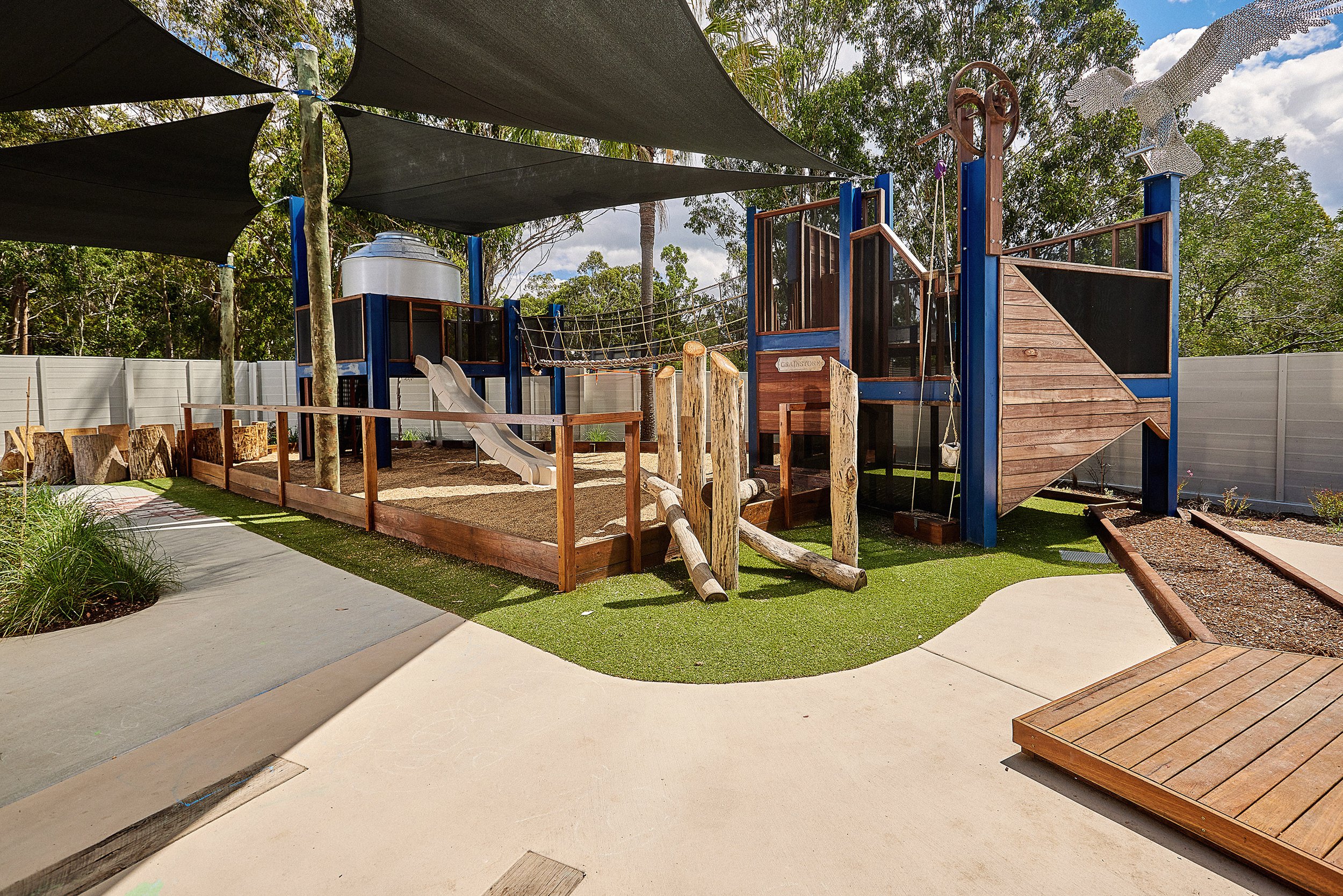
The challenge children face today is their increasing disconnect with nature. This is perhaps caused by the density of housing where they live, lack of natural materials they interact with, or limited time they spend outside.
With our cities growing and our suburbs sprawling, it's easy to see how children today may be suffering from disconnect. Less space to play, busy parents, plus the ease of screen time — it's no wonder children are lost when it comes to forming a relationship with nature.
"With our cities growing and our suburbs sprawling, it's easy to see how children today may be suffering from disconnect."
Prefer to read the full e-book?
Download the beautifully designed PDF — imagery, layout, and all — to read offline or share with your team.
Be the Example of the Change
The good news is we are involved in a sector that has a big impact on the way children, their families and greater communities interact with their environment. The regulation that "children must be able to explore and experience the natural environment" shows just how much the sector values the development of a child. It's proven that the most effective way to inspire change is to be the example of that change.
Imagine your centre and play environment as your banner for the world you want to see and teach. What is the message you are sending? What are your values? Where is the child represented? What does this profession mean to you? Where is nature present?
Another great way to see change is by empowering those who create the change we want to see. Small changes can be made every day to make monumental impact. Here are a few things you can do (if you're not doing already) to support exploration, celebrate learning and inspire change.
1. Grow Your Resources
Before you start saying you "kill everything" and stop reading — don't. I'm referring to the growth of children, not the growing of plants.
Children being supported with what they need will guide you into creating an environment together. Ask yourself: what do children need to grow? And take action on that answer. It might be a positive relationship, room to move, or space to stretch in the environment we create and plan. How are you growing?
2. Celebrate What Matters
Since the 1840s, when the phrase "Kindergarten" was first coined, the idea of "the garden for the children" was an important developmental resource. Educators have been building on the back of this theory by applying experience and research that states children need nature to learn and grow.
"What is the message we are sending to parents if the environments we create are full of plastic, rubber and disposable rubbish?"
However, what is the message we are sending to parents if the environments we create are full of plastic, rubber and disposable rubbish? Remember, we are not just educators of children. It's also our duty to guide parents to make well-informed decisions about their child's development. What story are we telling about the work we do and the effort we make?
So, let's celebrate the dirt, mud, sand and water that bind play and learning together. Give billboard examples on your walls of how recycled bits and pieces create open-ended learning experiences that go for days and weeks. Lastly, let's create an environment that parents today wish they got to grow with as children.
3. Sit Intentionally
I don't mean sit in the same way you would sit when arriving home after a big day. I mean actively sit, in your environment, with children, and just be there to play and build relationships. Shelf your intentional teaching or scaffolding theory and just connect with the children.
It's much harder than it sounds. It takes confidence, persistence and a willingness to be the child's equal that will bring the walls down and allow a relationship that's based on respect to grow.
"When we use a natural environment to sit, it makes for an even deeper connection."
When we use a natural environment to sit, it makes for an even deeper connection. When a child's needs are being met and they feel supported, it helps the child to value what supports them: a tree they can climb, a bush they can disappear into, a stick they can swing, or an adventure with friends. These all contribute to how they value their environment and the people within it.
Commit to sit — intentionally and actively.